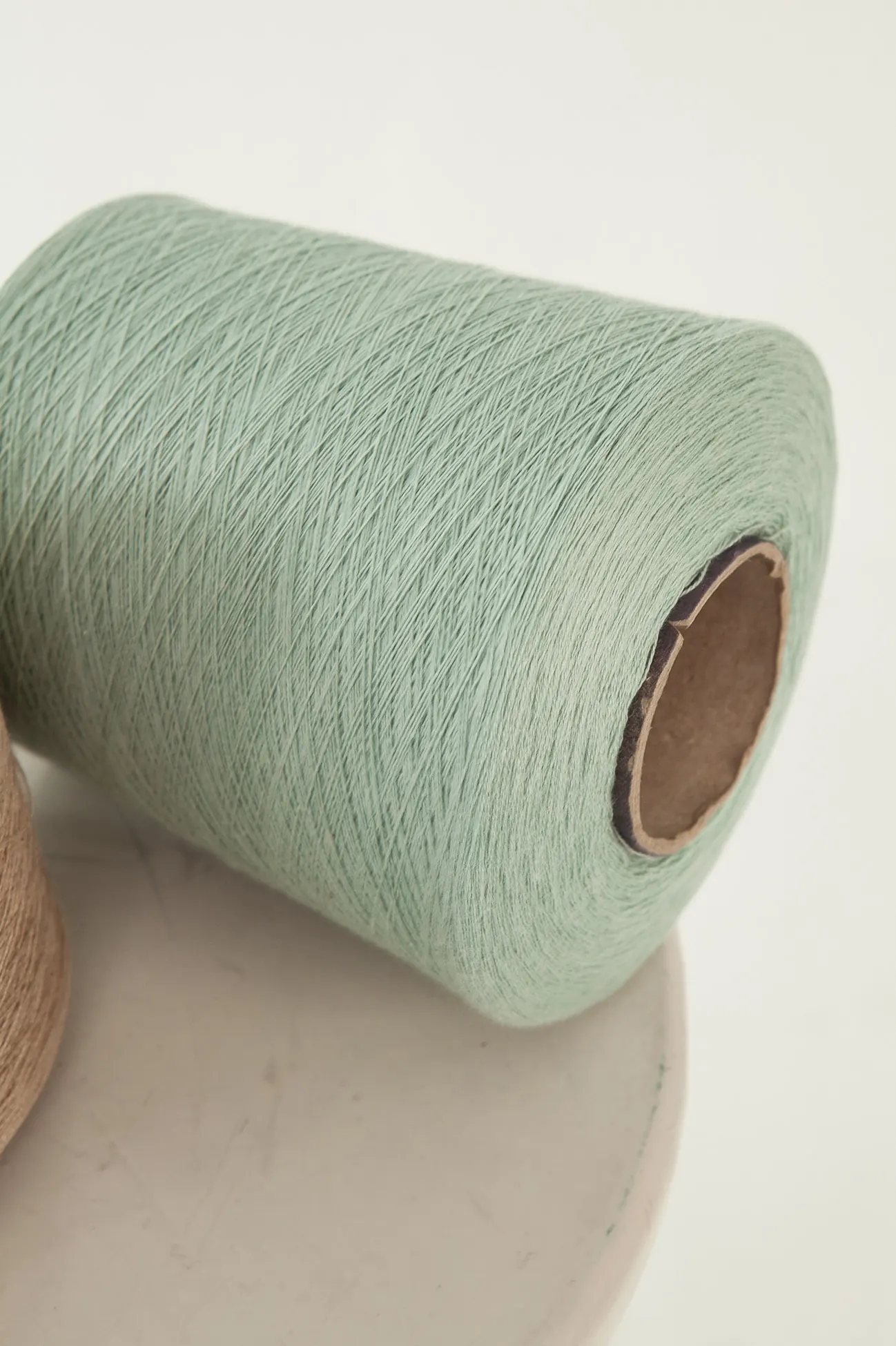
In short
- Natural fibres breathe, regulate temperature and hold less odour.
- Acrylic is cheap and easy-care but feels clammy, builds static and pills quickly.
- A small share of synthetics helps: nylon for sock strength, metallic thread for sparkle.
- For a piece that lasts years, choose a mostly natural blend.
An acrylic sweater and a mohair cardigan can differ in price many times over. Is the difference worth it? An honest comparison.
Comparison
| Criterion | Natural (mohair, merino, silk) | Synthetic (acrylic, polyester) |
|---|---|---|
| Warmth | high, without overheating | warm but clammy |
| Breathability | excellent | poor |
| Odour | holds less | absorbs quickly |
| Static | minimal | strong |
| Pilling | depends on quality | pills quickly |
| Care | gentle | easy |
| Ageing | beautifully, for years | loses its looks fast |
| End of life | biodegradable | microplastics |
Why natural fibres work
Wool and mohair can absorb moisture from the air while still feeling dry, so you do not overheat indoors or chill outside. Silk is a natural temperature regulator. Acrylic cannot do this: moisture stays on the skin.
Shop the edit
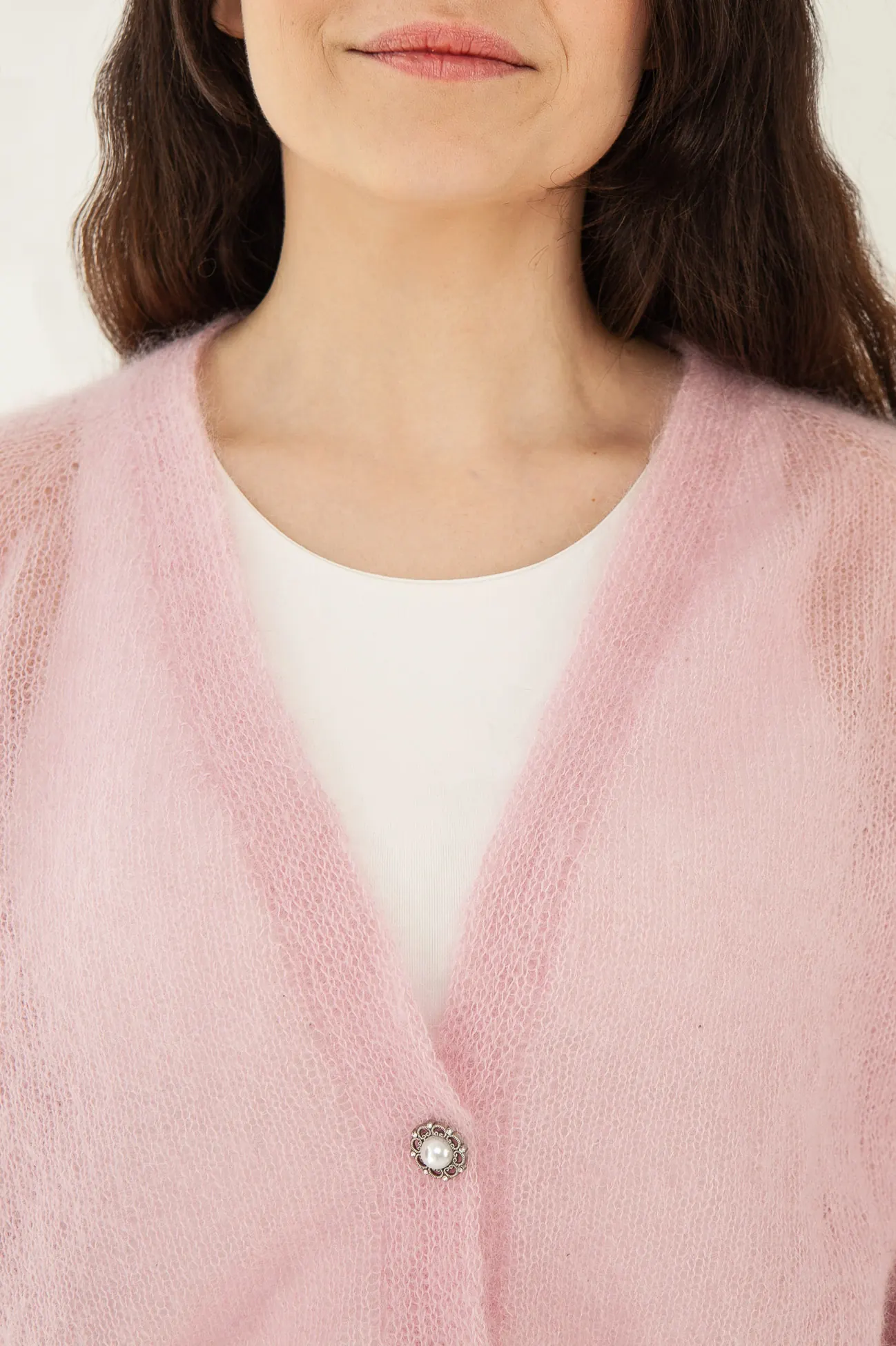
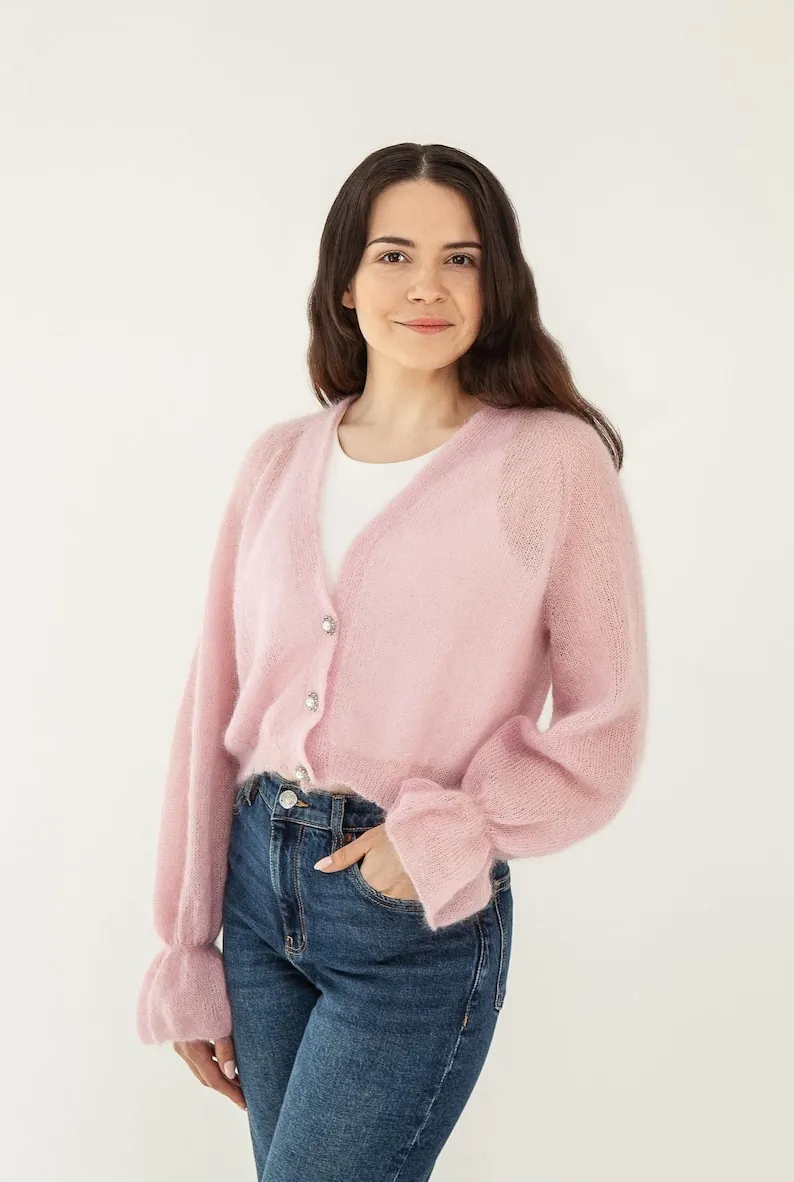 Kid Mohair & Silk Cardigan, Blush Pink · $175
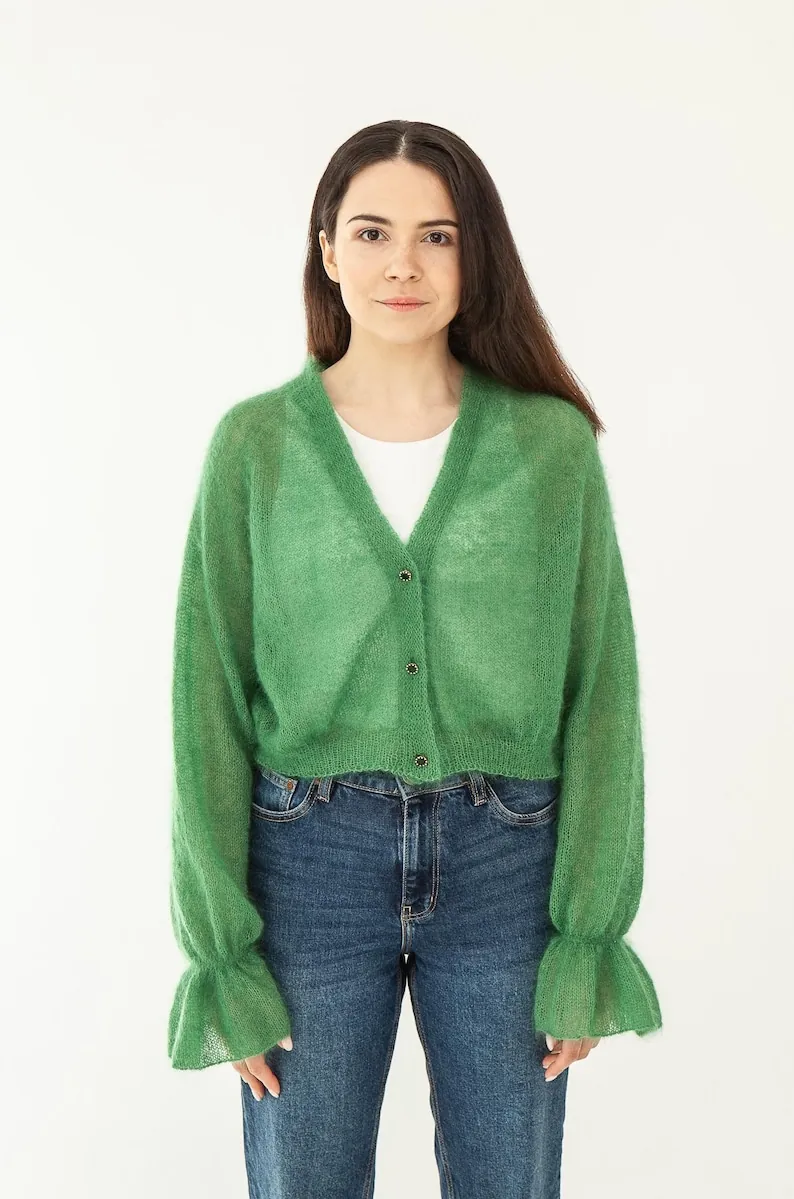 Kid Mohair & Silk Ruffle-Sleeve Cardigan, Green · $175
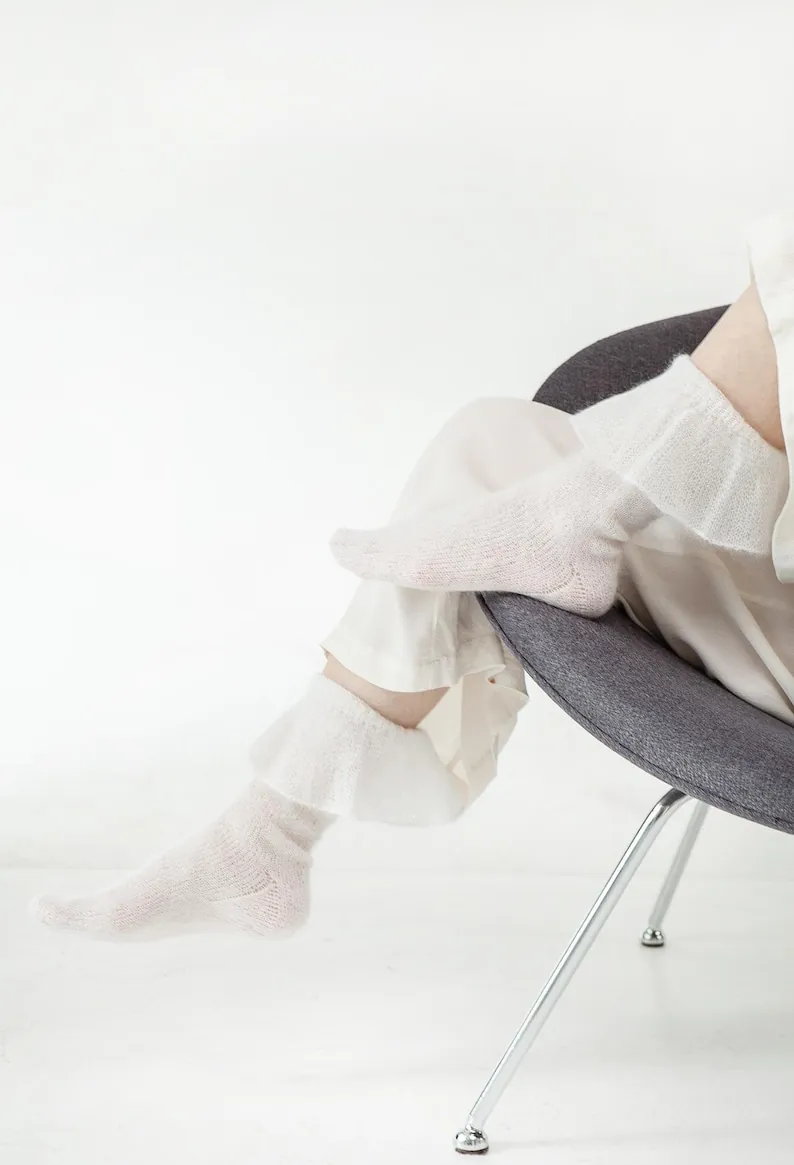 Kid Mohair & Silk Ruffle Socks, Ivory · $50
When synthetics make sense
- Nylon in socks reinforces heels and toes.
- Metallic thread adds sparkle, as in our Rosie, Graphite and Turquoise cardigans (~5%).
- Elastane in cuffs helps them keep their shape.
Proportion is everything: a small addition improves a piece, a large one replaces it.
The environment
Synthetic fibres release microplastics in the wash. Natural ones biodegrade. And a piece in quality wool lasts longer, which is the most sustainable choice. More in Slow fashion and handmade.
FAQ
Is an acrylic sweater less warm?
It can be warm, but it handles moisture poorly, so it quickly feels stuffy, then cold when you sweat.
Is there hypoallergenic natural yarn?
Silk, cotton and alpaca (lanolin-free) often suit sensitive skin. For a true allergy, ask a doctor.
Is yarn with 5% lurex still natural?
Yes; it is mostly natural fibre, with lurex added only for shimmer.