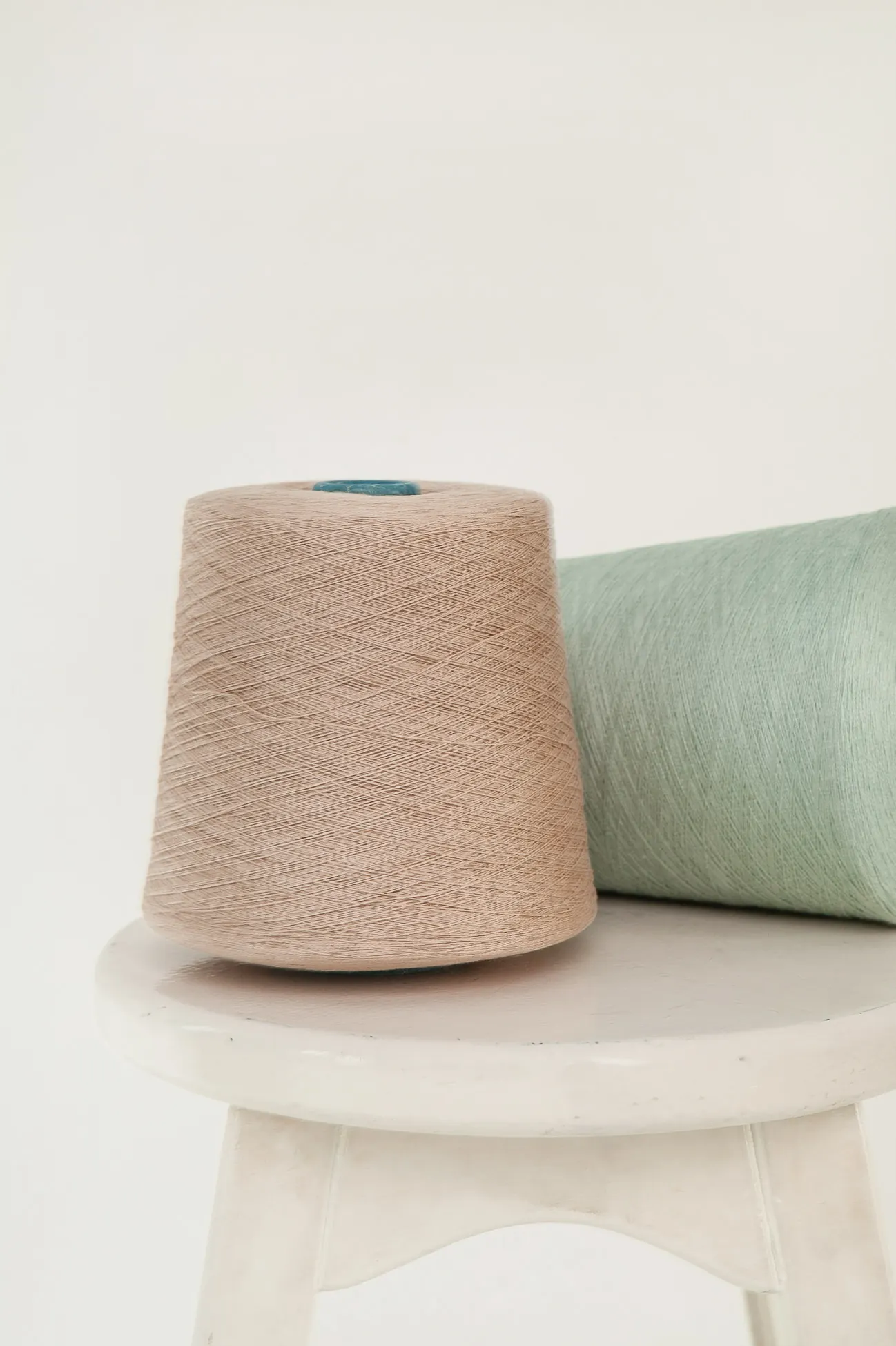
In short
- Italy is one of the world’s great spinning centres; the Biella district is often called Europe’s wool capital.
- Italian mills select the finest fibre, comb it carefully and spin it with an even twist, so the yarn is softer and lasts longer.
- Clean dyeing, a beautiful “hand” (how it feels) and consistent dye lots are the advantages you see in the finished piece.
- For clothing that touches the skin, like cardigans and socks, it is the difference between “itchy” and “never want to take it off”.
When you hold a cardigan in Italian kid mohair, you feel more than softness. You feel a century of craft, careful fibre selection and finishing that many producers simply do not spend time on. Here is what that value is made of.
1. A spinning tradition over a century old
Northern Italy is one of the world’s best-known textile regions. The Biella district in Piedmont is often called the wool capital of Europe: it is home to spinning and weaving mills with very long histories, and its soft mountain water was historically prized for washing and dyeing wool. Tuscany, with the city of Prato, is another major textile centre. Know-how passed down through generations is not marketing; it is hundreds of small technical decisions that shape the quality of a thread.
2. Selecting the finest fibre
The key property of yarn is fibre diameter, measured in microns. The finer the fibre, the softer it feels on skin. Italian spinners buy raw fibre from the best sources in the world, such as kid mohair from South Africa, merino from Australia and silk from Asia, and select the finest lots. More on microns in What is kid mohair.
3. Careful combing and even spinning
Before spinning, fibre is combed to align it and remove short fibres. Those short fibres are exactly what later works its way to the surface and forms pills. Good worsted combing gives a smooth, even thread that pills less and keeps its looks longer.
4. Clean, deep colour
Dyeing is a craft of its own. Italian yarn is known for clean, “expensive” shades: powder pinks, lavenders, sea greens. Mohair takes dye beautifully, so colours come out rich and luminous. Consistent dye lots matter too: the colour does not drift from cone to cone.
5. The “hand”
Textile people call the way a material feels its “hand”: softness, spring, drape. Italian mills refine it with finishing, so a cardigan does not just keep you warm, it wraps you.
6. Noble fibre blends
The classic Italian blend is kid mohair and silk, usually 70/30. Mohair brings the fluffy halo and warmth; silk adds a strong, smooth core and a soft sheen. It can be knitted into an almost sheer fabric, so the piece is weightless yet warm. See Kid mohair and silk: the perfect pair.
7. Longevity
Well-spun yarn from long fibre lasts for years: it does not stretch out, pill badly or fade with proper care. A piece in Italian yarn is an investment, not a one-season buy.
Shop the edit
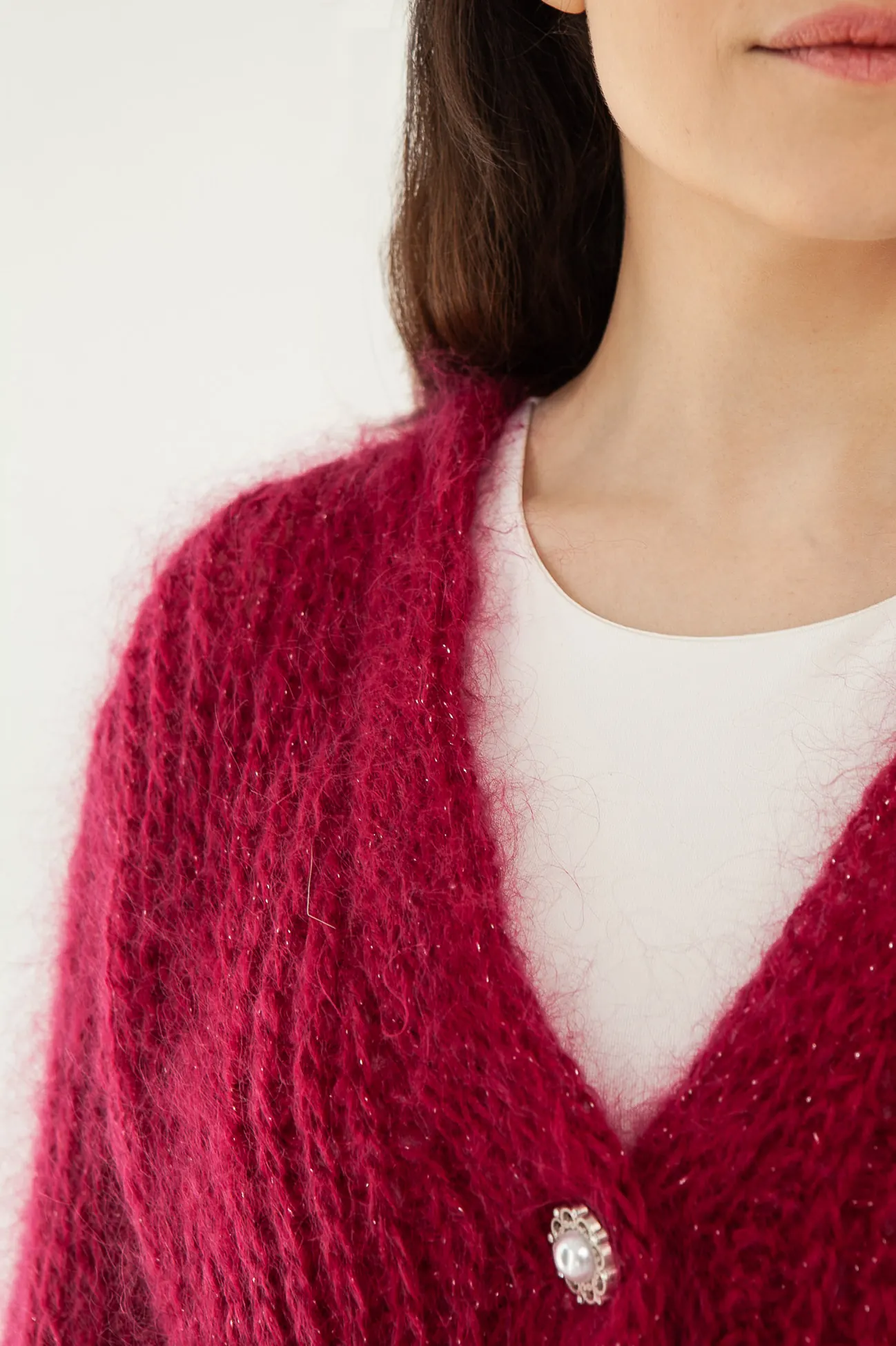
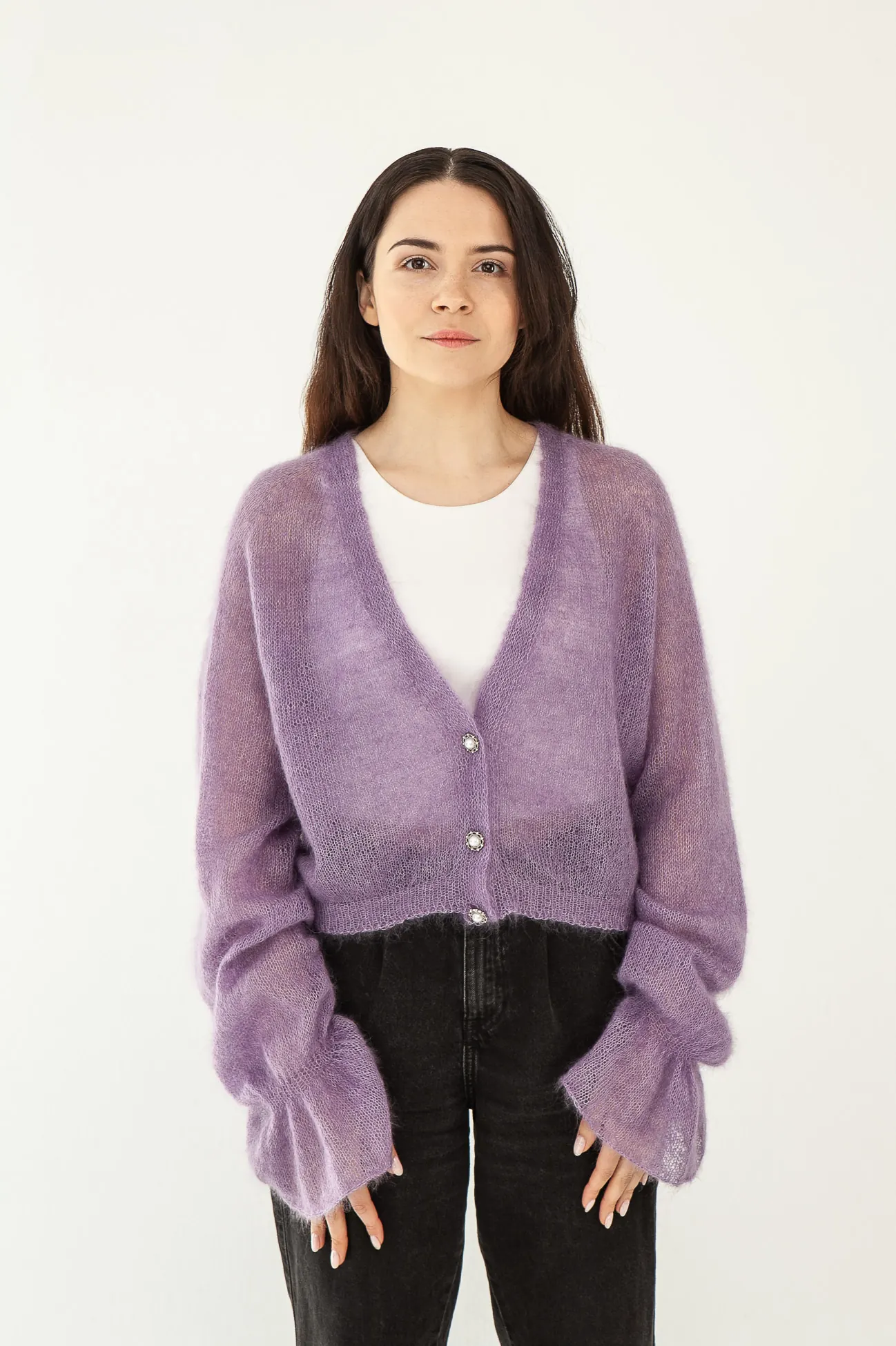
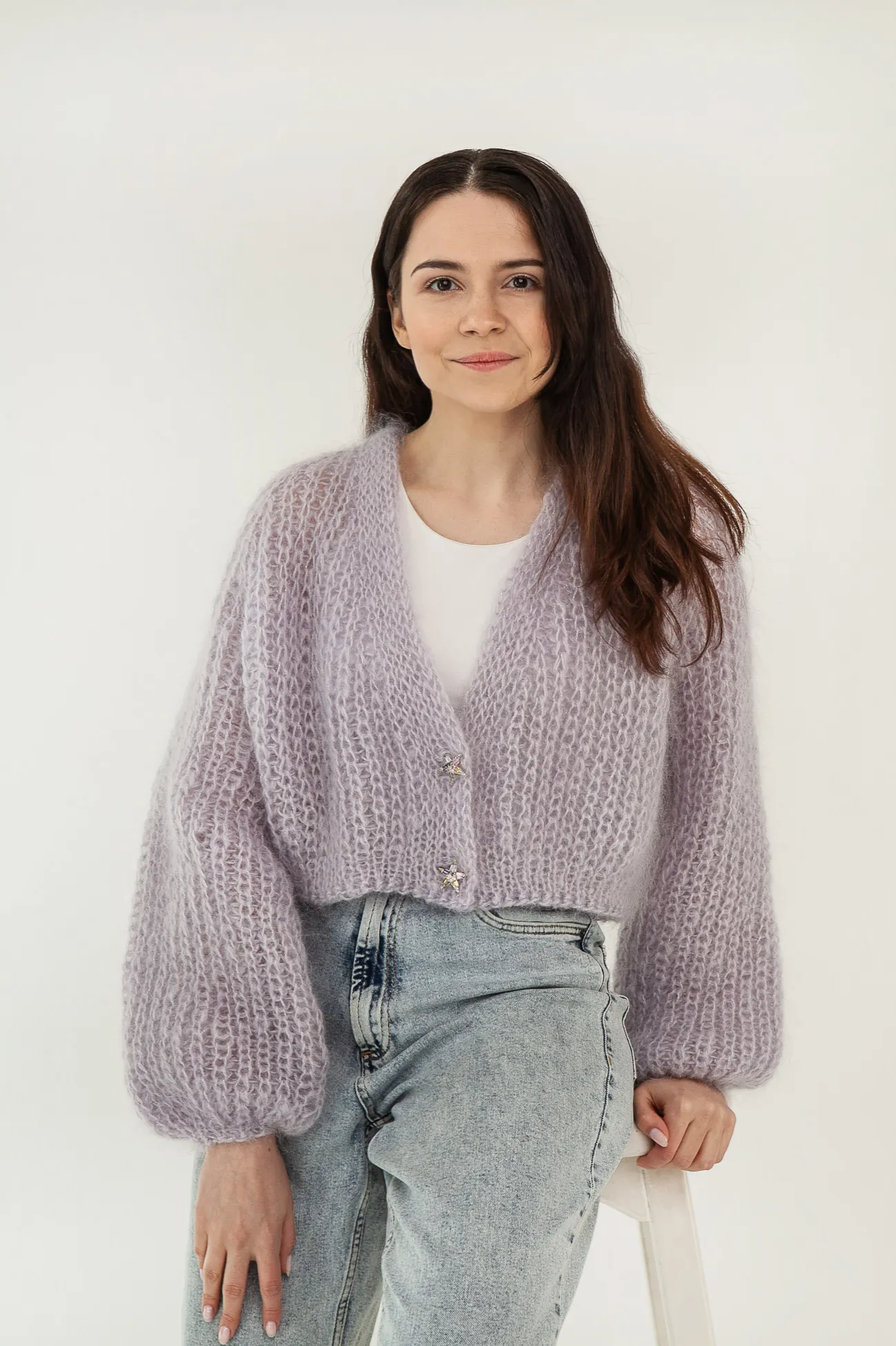
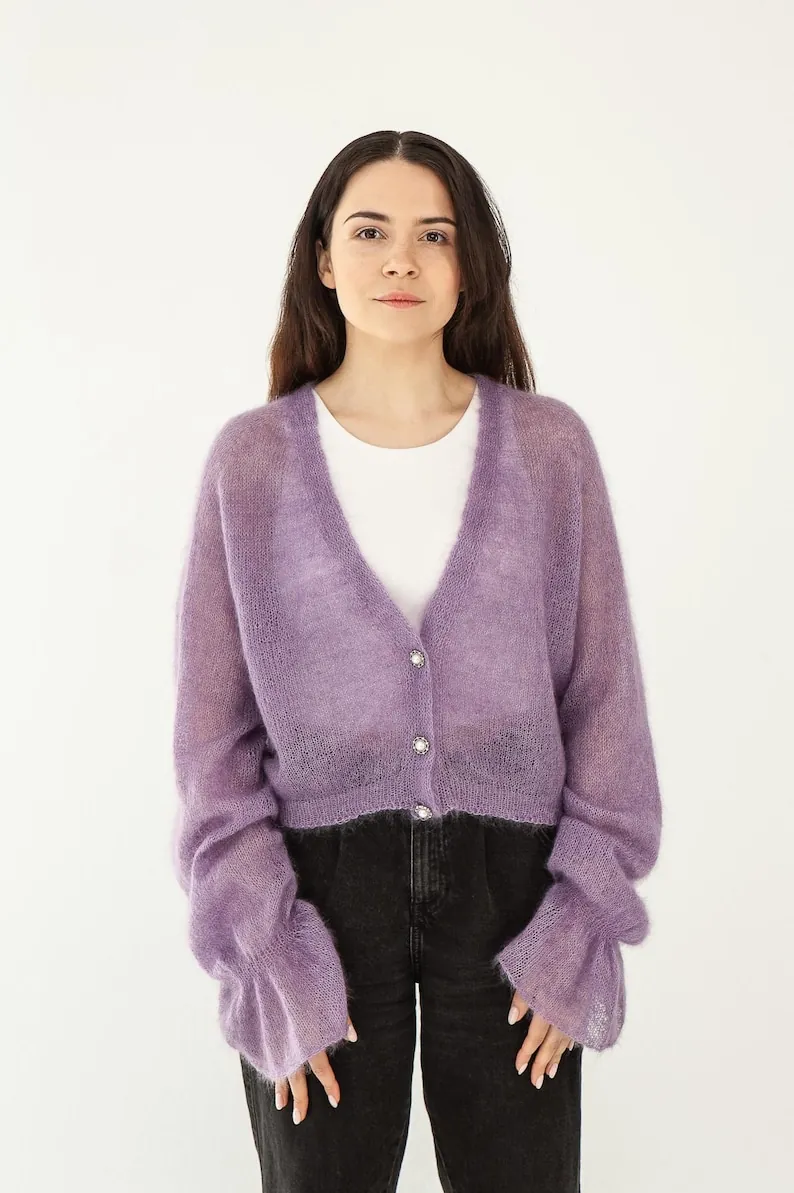 Cropped Kid Mohair & Silk Cardigan, Lavender · $175
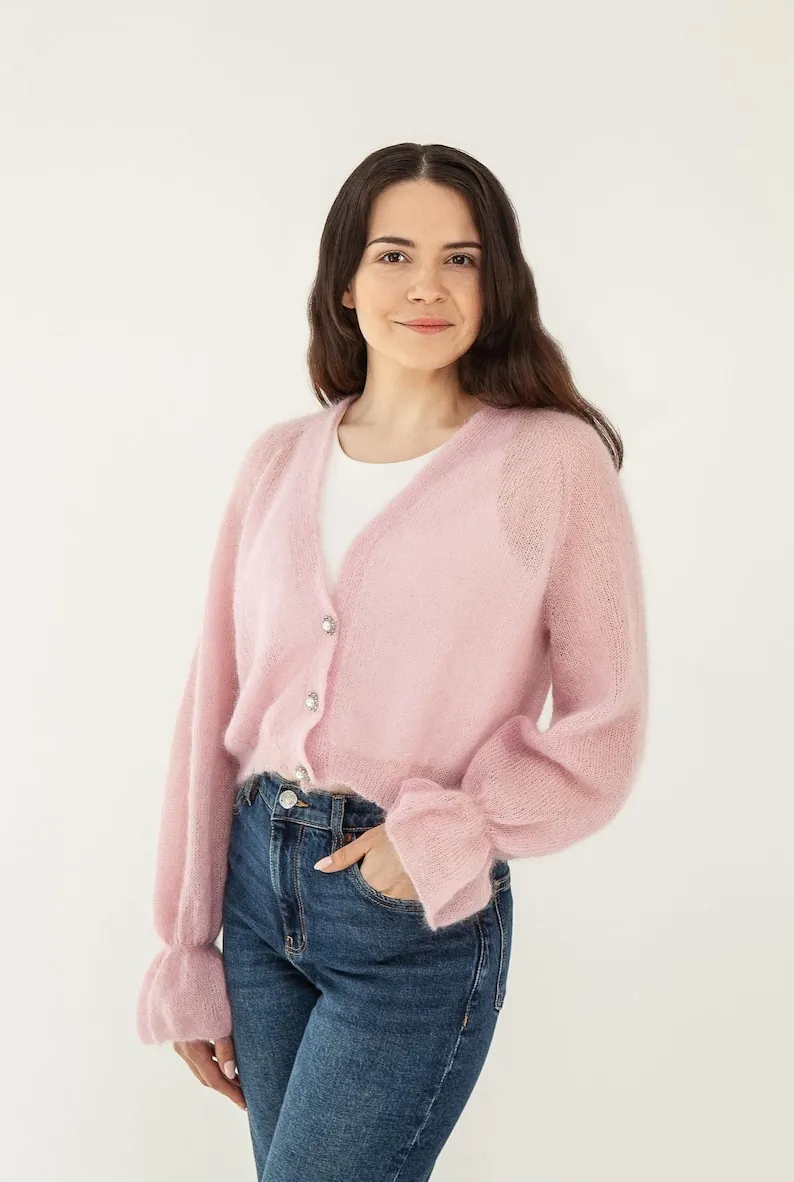 Kid Mohair & Silk Cardigan, Blush Pink · $175
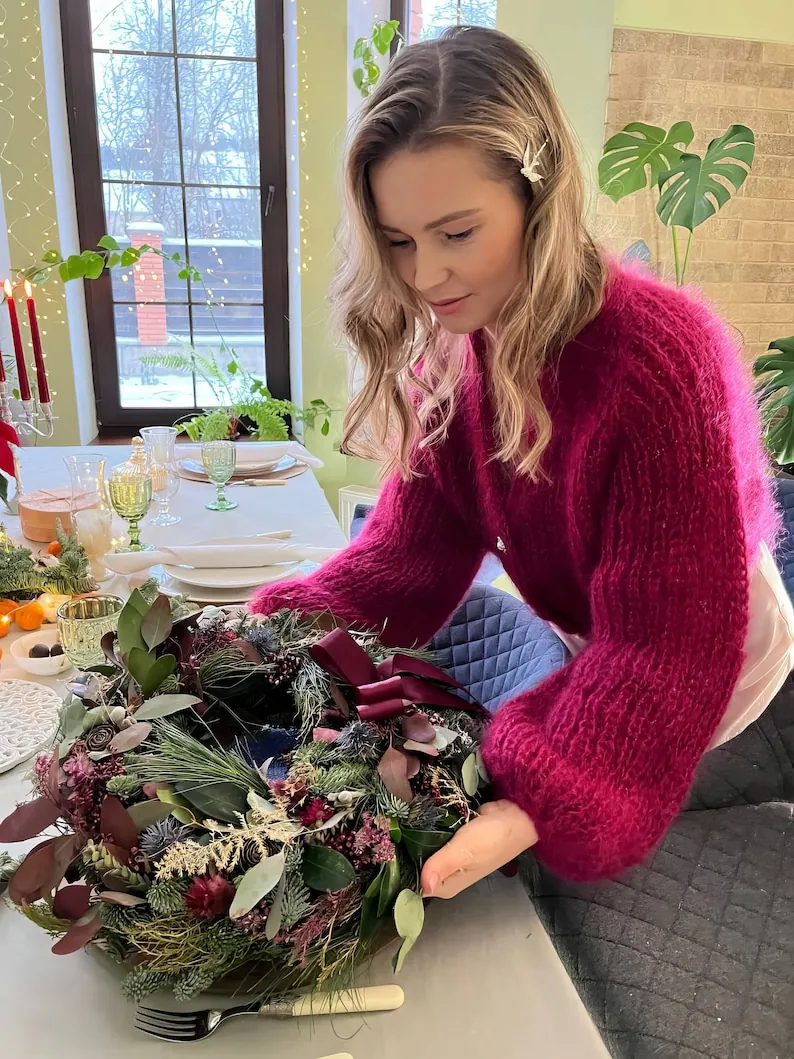 “Rosie” Baby Mohair & Merino Cardigan, Fuchsia · $212.50
How to recognise quality yarn
| Sign | Quality yarn | Cheap yarn |
|---|---|---|
| Label | Specific: “70% kid mohair, 30% silk” | Vague: “mohair mix”, lots of acrylic |
| Touch | Soft and springy, no itch at the neck | Harsh, or oddly slippery |
| Halo | Long, even, luminous | Short, pills quickly |
| Colour | Even and deep | Patchy, fades after washing |
Why we knit with it
At AuraHome we work with Italian yarn because in handmade knitwear, the material is half the result. We spend days on every cardigan, so we want it to make you happy for years. Browse the collection or go straight to Etsy.
FAQ
Does Italian yarn mean the wool comes from Italy?
Not necessarily. The raw fibre (mohair, merino, silk) is usually sourced from the best producing countries, then combed, spun, dyed and finished in Italy. The value lies in the Italian processing.
Is Italian yarn worth the price?
For pieces that touch your skin and should last for years, yes. You pay for softness, longevity and colour you can see and feel in the finished garment.
Which Italian yarn is the softest?
Among the softest are cashmere, kid mohair with silk and extra-fine merino. For our light cardigans we choose kid mohair with silk.